
Bitcoin Miner Face-Off: BitAxe 601 Gamma (BM1370) vs. Canaan Avalon Nano 3S
Choosing a desktop Bitcoin miner today comes down to a clear fork in the road: do you want an ultra-efficient, open-source “lottery” solo miner that sips power, or a higher-throughput, quiet appliance that still fits at home? In this head-to-head, I’ll compare three small-form miners built for home and office: two BitAxe 601 Gamma variants built around Bitmain’s BM1370 chip, and the Canaan Avalon Nano 3S.
Here’s how I’m judging them:
- Performance and efficiency: hashrate, watts, and joules per terahash
- Noise and thermals: how easy they are to live with
- Setup and control: firmware, interface, and network options
- Ecosystem fit: open-source tinkering vs. “plug it in and let it run”
- Practical extras: included power supply, stand, and desktop readiness
Quick Comparison Table
| Miner | Hashrate (TH/s) | Est. Power Draw | Efficiency (J/TH) | Noise Profile | Firmware/UI | Network/Control | Extras |
| Open Sources Miner BitAxe 601 Gamma BM1370 1.2TH/s | ~1.2 | ~17–22 W (tunable) | ~14–18 | Low, desktop-friendly | Open-source (AxeOS/ESP-miner family) | Web UI; typically Wi‑Fi control | Stand and power supply included |
| Bitcoins Miner 1.2TH/s Bit Gamma 601 (BM1370) | ~1.2 | ~17–22 W (tunable) | ~14–18 | Low, “micro silent” | Open-source (AxeOS/ESP-miner) | Web UI, 2.4G Wi‑Fi | Requires 5V/6A PSU (barrel jack) |
| Canaan Avalon Nano 3S (Black) | ~6.0 | ~140 W | ~23 | Whisper‑quiet | Vendor-focused, user-friendly | Not specified in listing | Includes original Canaan power supply |
Notes:
- Efficiency figures for the BitAxe units vary by tuning and environment; the second listing cites ~14 J/TH in the description and 18 W/TH in the title, which is consistent with typical BM1370 single‑chip behavior when tuned.
- The Avalon Nano 3S emphasizes low noise, simple setup, and a bundled PSU; its efficiency is good for a compact appliance, though behind a well‑tuned BM1370 single‑board on a per‑TH basis.
1. Open Sources Miner BitAxe 601 Gamma BM1370 1.2TH/s with Stand & PSU
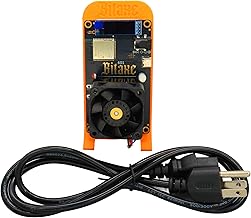
The Bitaxe Gamma is powered by the BM1370 ASIC chip, which is the same chip used in the Antminer S21pro. This chip is known for its exceptional efficiency, with a power consumption of just 15W/th. This makes the Bitaxe Gamma one of the powerful and energy-efficient miners on the market, allowing miners to potentially maximize their profits while minimizing their environmental impact.
$63.30 on Amazon
If you want a compact, open-source miner that’s genuinely power‑miserly, this BitAxe 601 Gamma build checks the boxes. It centers on the BM1370 generation—the same silicon lineage behind flagship rigs—but scaled down into a single‑chip board that typically runs around 1.2 TH/s while sipping tens of watts. That puts it in “leave it on” territory and makes it one of the most energy‑efficient options for hobbyists.
What sets this version apart is completeness: you get a stand for tidy desktop placement and a power supply in the box. The web UI (AxeOS/ESP‑miner family) gives you the flexibility to tune clocks, watch temps, and point to solo or pool endpoints. As a daily desk companion, it’s quiet, customizable, and easy to live with—just remember that with 1.2 TH/s, the solo‑mining jackpot odds are very long, so many users still point it at a pool for steady trickles.
2. Bitcoins Miner 1.2TH/s Bit Gamma 601 (BM1370) with 2.4G WiFi
This Bit Gamma 601 configuration hits the same core value as other BitAxe‑style builds: small, quiet, and fully open for tinkerers. The vendor highlights an ESP‑miner + AxeOS combo for easy browser management, 2.4G Wi‑Fi connectivity, and power sipping in the teens of watts. The result is a pleasant home miner you can tuck next to a router or on a shelf and forget—except when you want to tweak clocks or check stats.
The main difference from the first BitAxe listing is what’s in the box. Here, power is via a standard 2.1/5.5 mm barrel jack, and you’ll need a stable 5V/6A supply. That’s not hard to source, but it’s one more purchase. Efficiency claims vary by tuning and environment, but the BM1370 single‑chip architecture has proven capable of excellent J/TH in a desktop‑friendly footprint.
3. AltairTech.io Canaan Avalon Nano 3S (6 TH/s, 140W, Quiet)
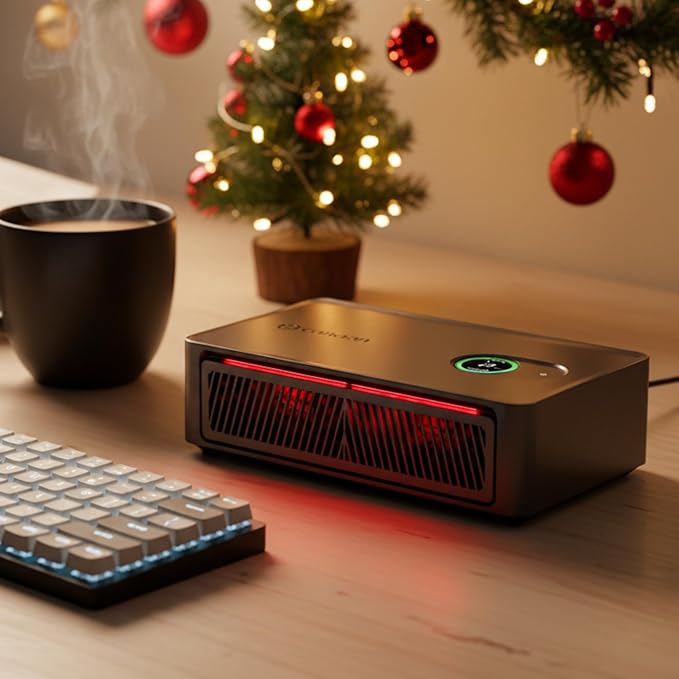
The Avalon Nano 3S aims squarely at the “I just want a quiet, capable home miner” crowd. With roughly 6 TH/s at about 140 W, it delivers ~5x the hashrate of the 1.2 TH/s BM1370 boards while staying whisper‑quiet and compact. Think of it as a living‑room‑friendly appliance: setup is designed to be straightforward, and the included original Canaan power supply reduces compatibility headaches.
You trade away a bit of per‑TH efficiency versus a tuned BM1370 single‑board, and you lose the deep tinkering that open‑source fans love. But for many buyers, the equation is simple: more hashrate, low noise, and minimal fuss. If that’s you, the Nano 3S is a compelling “set it and forget it” option that won’t overwhelm your space or your power circuit.
Which One Should You Pick?
- You want the most efficient, hackable, ultra‑low‑power desk miner:
Go with the Open Sources Miner BitAxe 601 Gamma (with stand and PSU). It’s tidy right out of the box, sips power, and gives you a full open‑source UI for tinkering. Perfect for learning, experimenting, or keeping a low, steady presence on a pool.
- You prefer open‑source but don’t mind sourcing your own PSU:
Pick the Bitcoins Miner Bit Gamma 601. Same BM1370 core idea, same AxeOS/ESP‑miner usability, and 2.4G Wi‑Fi convenience. You get flexibility on the power brick, which some users like because they can choose higher‑quality or quieter PSUs.
- You want more hashrate without the noise and don’t need open‑source tweaking:
The Canaan Avalon Nano 3S gives you ~6 TH/s in a quiet, home‑friendly package. If your priority is a stronger contribution to a pool with minimal setup headaches, it’s the best fit here.
- You’re ROI‑sensitive and calculating pure profitability:
None of these are industrial miners; network difficulty, power rates, and BTC price matter far more than small efficiency deltas. The Avalon’s higher hashrate can yield more pool‑side rewards, but it also uses more power. The BitAxe units excel at efficiency and low cost to run, but their low TH/s makes them best as hobby or educational miners unless the market moves dramatically.
- You’re building a quiet, multi‑unit “swarm”:
Consider multiple BitAxe 601 Gammas for a modular, open‑source lab. They’re quiet, efficient, and easy to spread across outlets. If you’d rather minimize device count and wiring, a single Avalon Nano 3S may be simpler.
FAQ
- Which is quieter for a bedroom or office?
The Avalon Nano 3S emphasizes whisper‑quiet operation and is purpose‑built for silent environments. The BitAxe 601 Gamma boards are also low noise, but the Avalon is the safer bet if silence is paramount.
- Which miner is more energy‑efficient on a per‑TH basis?
A well‑tuned BM1370 single‑chip (BitAxe/Bit Gamma) can reach roughly 14–18 J/TH. The Avalon Nano 3S runs around 23 J/TH. So the BitAxe‑style units are typically more efficient per terahash, while the Avalon provides higher overall hashrate.
- I’m new to mining—what’s easiest to set up?
The Avalon Nano 3S is the most appliance‑like, including its original power supply and a quiet thermal profile. The BitAxe units are straightforward too, especially with AxeOS/ESP‑miner web controls; just be ready to handle Wi‑Fi setup and, for the Bit Gamma 601, sourcing a compatible 5V/6A PSU.
- Can these miners do solo mining?
Yes. All three can be pointed to solo endpoints, but understand the odds. At 1.2 TH/s, the BitAxe units are essentially “BTC lottery” miners. The Avalon’s 6 TH/s improves your chance but is still tiny relative to the network; most people prefer pool mining for regular payouts.
- What about heat and placement?
Keep all miners in a ventilated spot. The BitAxe boards generate modest heat and fit easily on a desk or shelf. The Avalon Nano 3S is also compact and quiet, but at ~140 W it emits more heat and benefits from a bit more breathing room.
Final Thoughts
Choosing between these miners is really about your intent. If you want to learn, tinker, and run a truly frugal, open‑source desktop miner, the BitAxe 601 Gamma variants are delightful. The “Open Sources” bundle adds convenience with a stand and PSU; the “Bit Gamma 601” variant gives you Wi‑Fi and flexibility on the power brick.
If your goal is more hashrate without sacrificing home friendliness, the Canaan Avalon Nano 3S balances quiet operation with roughly 5x the throughput of a single‑chip BM1370 board. It’s the one I’d steer toward when simplicity and punch matter more than open‑source customization.
Whichever way you go, map your choice to your environment, noise tolerance, and willingness to tweak. Get those right, and you’ll feel good about the miner on your desk—and the role it plays in your setup.



0 Comments